


Views: 0 Author: Site Editor Publish Time: 2026-09-05 Origin: Site


The solar manufacturing industry is undergoing a massive shift today. Factories are rapidly transitioning from legacy P-type to advanced N-type cell architectures. Factory owners and project developers face a tough core conflict. You must balance the proven reliability and sunk capital of legacy P-type manufacturing against the superior Levelized Cost of Energy (LCOE) and higher theoretical efficiency of N-type technologies. Upgrading production lines requires careful financial and technical calculation.
We will explore this critical transition in detail. Procurement managers, EPCs, and module manufacturers will gain a rigorous, evidence-based evaluation of N-type and P-type technologies. You will discover actionable insights to guide production line upgrades safely. By the end, you will understand how to optimize your large-scale module procurement strategies for maximum long-term returns.
Efficiency Caps: PERC technology is plateauing near its theoretical efficiency limit (~24%), while TOPCon pushes mass-production efficiencies past 25%.
Production Viability: TOPCon offers a highly scalable, lower-CAPEX upgrade path for existing PERC manufacturing lines compared to HJT.
Long-Term ROI: Despite higher upfront costs (primarily driven by silver paste consumption), TOPCon delivers lower degradation rates (zero LID/LeTID) and a superior temperature coefficient, significantly reducing LCOE.
Form Factor Shifts: The industry standard is heavily polarizing around the M10 PERC Solar Cell for legacy replacements, and the M10 and G12 TOPCon Solar Cell formats for next-generation utility scale.
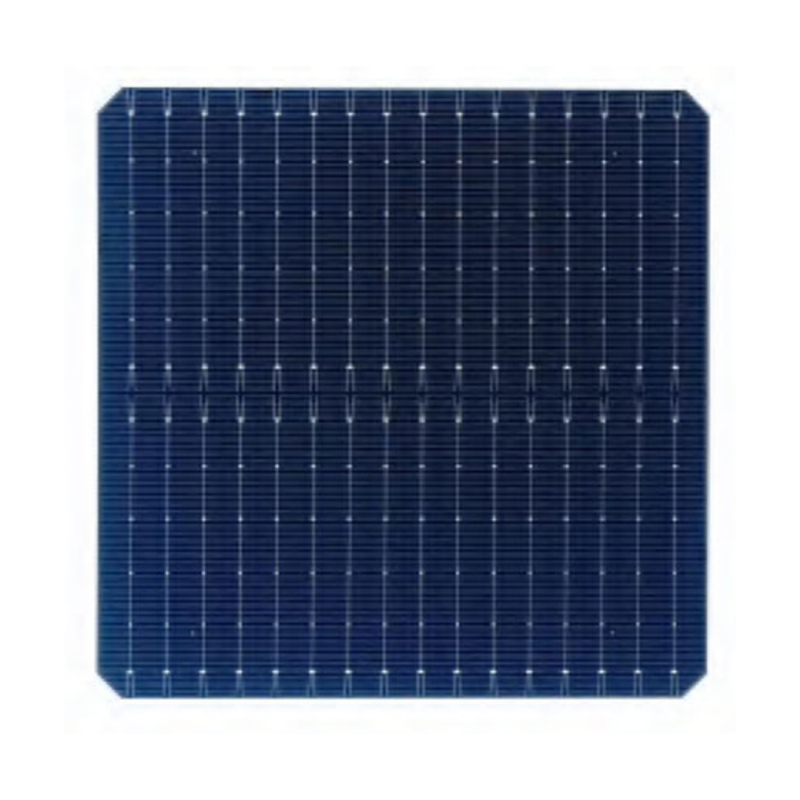
The LCOE imperative drives every decision in modern solar deployment. Every fraction of a percent in efficiency increases energy yield. This directly improves downstream project viability. You can optimize land use significantly when modules produce more power per square meter. When developers plan large utility installations, cell efficiency dictates structural costs. Higher efficiency means fewer modules are required to hit target capacities. Fewer modules mean reduced mounting structures, less cabling, and lower labor hours during installation. These compounded savings dramatically lower the overall LCOE.
The industry must acknowledge the current P-type bottleneck. This technology drove global solar adoption successfully for a decade. Manufacturers optimized these lines heavily to reduce production costs. However, inherent physical limits now restrict performance scaling. Recombination losses naturally occur in P-type silicon structures. These electron losses create a hard ceiling for energy conversion. Manufacturers cannot push past this efficiency boundary without fundamentally altering the cell architecture.
Transitioning to new production standards requires strict success criteria. Evaluating new technology demands rigorous analysis from multiple angles. You must look far beyond simple laboratory efficiency numbers.
Evaluate the capital expenditure (CAPEX) required for line conversion.
Monitor long-term yield consistency across continuous manufacturing shifts.
Assess supply chain maturity for critical consumables like metallization pastes.
Verify the availability of high-quality N-type polysilicon materials.
The fundamental mechanism relies on a P-type silicon wafer base. It features a standard dielectric passivation layer applied to the rear side. This specialized layer reflects unabsorbed light back into the cell structure. It gives the photons a second chance at absorption. This mechanism effectively boosts the current output.
The production state remains highly mature today. You benefit from a fully optimized global supply chain. Manufacturing yields remain highly predictable across tier-one factories. Industry players still trust the PERC Solar Cell for its historical stability. Equipment depreciation models are well understood, allowing manufacturers to run fully amortized lines at exceptionally low costs per watt.
The advanced mechanism uses a high-purity N-type silicon base. It features an ultra-thin tunnel oxide layer on the rear side. It also includes a highly doped polysilicon layer. This unique architecture drastically reduces carrier recombination at the metal contacts. It allows electrons to tunnel through the oxide layer freely, minimizing energy loss.
Manufacturing integration is surprisingly smooth for existing factories. You can integrate this architecture directly into existing P-type lines. You simply add Low-Pressure Chemical Vapor Deposition (LPCVD) or Plasma-Enhanced Chemical Vapor Deposition (PECVD) equipment. These tools apply the critical oxide and poly-Si layers. This approach entirely avoids the massive CAPEX of building new greenfield factories. It makes this the most financially viable N-type upgrade path available to the industry.
Efficiency limits define modern competitiveness in the global market. Let us compare current mass-production efficiencies. The standard M10 PERC Solar Cell typically delivers 23% to 23.5% efficiency. In stark contrast, the advanced M10 TOPCon Solar Cell consistently achieves 24.5% to 25.5% on modern production lines. This 1.5% absolute efficiency gap creates massive commercial leverage.
Furthermore, format sizes continue to increase rapidly. The larger G12 TOPCon Solar Cell creates an incredible impact on panel output. It helps manufacturers achieve 700W+ module power ratings easily. These high ratings are absolutely essential for modern utility-scale deployment. They maximize energy density per square meter, making previously unviable land parcels profitable.
Cell Technology Performance and Format Comparison
Cell Technology | Average Mass Production Efficiency | Typical Module Power Rating | Primary Commercial Use Case |
|---|---|---|---|
Standard M10 P-Type | 23.0% - 23.5% | 540W - 550W | C&I Rooftops, Budget-Capped Projects |
Advanced M10 N-Type | 24.5% - 25.5% | 570W - 585W | Premium Distributed Generation |
Large Format G12 N-Type | 24.5% - 25.5% | 700W+ | Utility-Scale Ground Mounts |
Yield in real-world conditions matters greatly for financial modeling. The temperature coefficient heavily influences actual power output during summer months. N-type structures show superior performance in extreme heat. They feature a temperature coefficient of -0.30%/°C. Legacy P-type operates at a less efficient -0.34%/°C. This difference translates directly to higher actual MWh generation in high-irradiance desert regions.
Bifaciality also sets these technologies apart significantly. N-type architectures achieve up to 85% bifaciality. Legacy P-type maxes out around 70%. This offers distinct advantages in utility-scale tracker deployments. The rear side captures significantly more albedo light bouncing off the ground. Over a project's lifespan, this extra rear-side yield improves the financial returns substantially.
Degradation and lifecycle reliability require strict technical focus. Independent testing laboratories continually confirm N-type advantages. N-type silicon wafers fundamentally lack boron-oxygen pairs. These destructive pairs exist abundantly in P-type wafers. They cause initial Light-Induced Degradation (LID) upon sunlight exposure. Using N-type wafers effectively eliminates LID and Light and elevated Temperature-Induced Degradation (LeTID).
Commercial warranties now reflect this physical reality. Advanced N-type architectures enable confident 30-year linear performance warranties. The annual degradation caps are much lower. You typically see 0.4% maximum annual degradation. Legacy models usually guarantee 0.45% to 0.5% annual degradation. Over three decades, preserving that extra half-percent compounds into immense energy value.
Every technology upgrade carries distinct operational risks. Silver paste consumption remains the primary commercial hurdle today. N-type cells require higher silver usage on both the front and rear sides. Because silver prices fluctuate heavily, this exposes manufacturers to material cost volatility.
The industry is aggressively developing mitigation strategies to lower material costs. Watch out for these crucial developments:
Laser-assisted metallization reduces finger line widths, saving substantial paste per cell.
Copper plating technology is rapidly maturing as a viable strategy to replace silver entirely.
Optimizing advanced screen printing processes lowers the overall grams-per-watt metrics safely.
Moisture sensitivity demands immediate attention during module assembly. N-type structures require stricter encapsulation materials. You must use Polyolefin Elastomer (POE) instead of traditional Ethylene Vinyl Acetate (EVA). POE prevents moisture ingress much more effectively. It protects the sensitive ultra-thin oxide structures from long-term corrosion. However, POE lamination takes slightly longer, which can slow down factory throughput if not optimized.
Equipment lead times can stall factory expansions. Procuring high-quality deposition tools creates immediate bottlenecks. LPCVD equipment manufacturers currently face massive global backlogs. You must plan procurement cycles many months in advance to scale production lines successfully. Rushing equipment qualification often leads to poor initial yields.
Deciding when to upgrade requires a clear framework. When should you retain or procure legacy technology?
Strictly budget-capped Commercial and Industrial (C&I) projects often prioritize the lowest initial cost per watt. Legacy modules serve this specific need exceptionally well. Manufacturers fully amortizing existing lines should wait. Do not initiate new CAPEX cycles prematurely. You should maximize the financial return on your fully depreciated assets first. Producing low-cost commodity panels still holds market value in developing regions.
When should you immediately transition to advanced N-type?
Utility-scale projects demand absolute high power density. Balance of System (BOS) costs and land limitations require maximum yield per module. Advanced N-type cells deliver this necessary performance reliably. Manufacturers looking for a low-risk technological bridge strongly prefer this route. You transition from P-type to N-type without building entirely new facilities. This contrasts sharply with Heterojunction (HJT) requirements, which demand entirely new, highly sterile factory environments.
The global solar manufacturing landscape is shifting permanently. While older architectures drove early adoption, modern physics demands new approaches. We are witnessing a clear divergence in procurement strategies across different market segments.
Legacy P-type remains a viable, low-cost commodity strictly for budget-sensitive or space-unconstrained markets.
Advanced N-type technology is cementing itself as the definitive baseline for modern, high-yield module production.
Procurement teams must audit existing production equipment compatibility immediately to plan CAPEX cycles.
Manufacturers should secure reliable N-type wafer supply chains now to avoid future material bottlenecks.
Evaluate your current production lines carefully. Calculate the exact LCOE demands of your target markets. Act proactively to position your manufacturing or procurement strategy for the next decade of solar deployment.
A: Upgrading is highly cost-effective compared to building greenfield factories. The primary CAPEX involves adding LPCVD tools for tunnel oxide deposition and boron diffusion equipment. Because you retain most existing wet chemical and metallization stations, the capital requirement is significantly lower than transitioning to HJT technology.
A: The 210mm larger wafer format correlates directly with higher module power output. By combining this massive surface area with advanced N-type efficiency, modules easily exceed 700W. This drastically reduces Balance of System (BOS) costs, requiring less racking and cabling for developers.
A: N-type technology exhibits zero Light-Induced Degradation (LID). First-year degradation for N-type modules typically sits at 1%, compared to 2% for legacy P-type. Annually thereafter, N-type degrades at just 0.4%, while legacy panels degrade at 0.45% to 0.5%, ensuring far higher lifetime energy yields.



