


Views: 0 Author: Site Editor Publish Time: 2026-09-01 Origin: Site


Utility-scale and commercial developers face a serious procurement challenge today. You reach a hard ceiling when relying on traditional P-type PERC modules. Their baseline efficiency limits and long-term degradation profiles actively bottleneck your potential project returns. We must look toward more reliable solutions to maximize land use and energy generation. The global solar industry is rapidly transitioning to advanced architectures. Developers now prioritize these new module designs to aggressively drive down the Levelized Cost of Energy (LCOE) across major installations.
This article provides a decision-stage evaluation of the bifacial TOPCon solar cell. We will analyze its core performance metrics, mechanical structure, and distinct advantages. You will discover how these technical improvements directly impact your overall project ROI. By understanding these next-generation components, you can make smarter procurement choices, optimize your system design, and secure higher energy yields for decades to come.
Bifacial TOPCon technology significantly lowers LCOE by combining higher baseline efficiency with an elevated bifaciality factor (up to 85%).
N-type architectures virtually eliminate Light-Induced Degradation (LID), securing more reliable long-term energy yields over a 30-year lifespan.
Selecting the right wafer format—such as a G12 TOPCon Solar Cell or a G12R TOPCon Solar Cell—allows developers to optimize Balance of System (BOS) costs for specific project constraints.
While upfront module costs may carry a slight premium, the increased generation capacity in high-albedo environments justifies the investment for utility-scale applications.
Traditional PERC technology served the solar industry well for years. However, a standard Solar Cell using P-type PERC architecture is currently approaching its theoretical efficiency limit of around 24.5%. This ceiling forces developers to seek alternative technologies to maximize energy density. When land costs run high, you cannot simply add more modules to reach your desired generation targets. You need individual panels to produce more power within the same physical footprint.
Tunnel Oxide Passivated Contact (TOPCon) mechanics provide the necessary breakthrough. Manufacturers add an ultra-thin silicon oxide layer and a doped polysilicon layer to the rear side of the cell. This specific combination drastically reduces electron recombination. Essentially, the passivated contact allows electrical current to flow freely while preventing electrons from being lost as heat. This targeted structural change pushes overall efficiency well past previous limitations.
Beyond structural changes, the base material matters immensely. A modern N-type Solar Cell uses a phosphorus-doped silicon base instead of a boron-doped one. This elemental shift eliminates the boron-oxygen defect complexes commonly found in P-type wafers. Those specific defects cause early-life performance drops. By removing them entirely, you secure immediate reliability and protect your investment during the critical early years of operation.
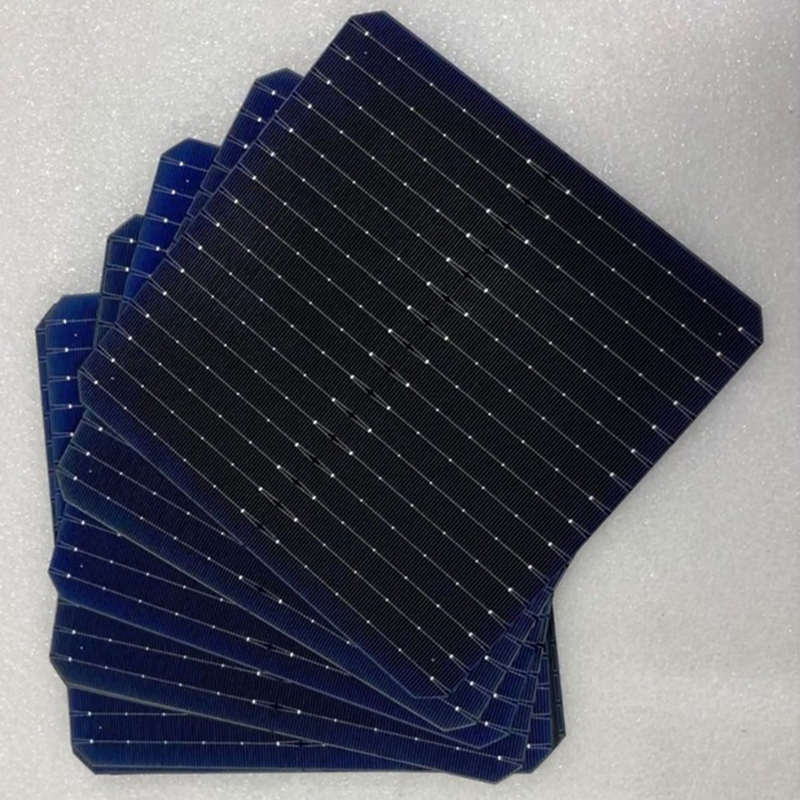
Next-generation architecture delivers tangible generation benefits in the field. When you transition to a bifacial TOPCon solar cell, you immediately unlock higher conversion efficiencies. Module efficiencies now move comfortably past the 22-23% threshold. This baseline jump means every square meter of your array converts more raw sunlight into usable alternating current.
The superior bifaciality factor serves as another major advantage. TOPCon technology delivers an 80-85% rear-side yield capability. Compare this against traditional PERC cells, which typically hover around 70%. This elevated factor translates directly to higher overall energy generation. If you deploy these panels on high-albedo surfaces like crushed white rock or snow, the rear side captures significantly more reflected light.
Extreme climates demand resilient components. These modules feature a uniquely low temperature coefficient, typically rated around -0.30%/°C or better. Older technologies lose substantial power when ambient temperatures soar. Better performance retention in extreme heat environments remains critical for successful desert or tropical deployments. You generate more stable power during the hottest, most demanding hours of the summer.
Long-term degradation ruins financial models if left unchecked. These modern cells feature zero Light-Induced Degradation (LID) and minimized Light and elevated Temperature-Induced Degradation (LeTID). You completely bypass the initial power drop experienced upon first sun exposure. This stabilization ensures highly reliable year-one performance and secures predictable lifetime yields.
Performance Metric | Bifacial TOPCon | P-Type PERC | Impact on Project |
|---|---|---|---|
Average Efficiency | 22.5% - 23.5% | 20.5% - 21.5% | Higher power density per square meter. |
Bifaciality Factor | 80% - 85% | 70% - 75% | Greater yield from rear-side reflection. |
Temperature Coefficient | ~ -0.30%/°C | ~ -0.35%/°C | Lower power loss in extreme heat. |
First Year Degradation | ≤ 1.0% | ~ 2.0% | Stronger year-one financial returns. |
Physical cell dimensions directly dictate the final module size, electrical parameters, and overall weight. You must understand form factor implications before finalizing your procurement strategy. Larger cells create higher wattage modules, but they also introduce specific installation and logistical challenges. Selecting the correct size ensures you do not waste money on unnecessary shipping costs or excessive mounting hardware.
The standard G12 TOPCon Solar Cell measures 210mm by 210mm. This massive footprint maximizes raw power output per module. You will often see panels utilizing this format hitting 600W to 700W or more. These modules are ideal for utility-scale ground-mounted projects. In these massive open-field environments, the Balance of System (BOS) savings heavily outweigh the handling challenges. You need fewer racks, fewer trackers, and fewer combiner boxes per megawatt.
Conversely, the G12R TOPCon Solar Cell features a 210mm by 182mm rectangular design. This slight reduction in width optimizes container space utilization during global shipping logistics. You can pack more modules into a standard 40-foot container, drastically lowering freight costs. This format provides a perfect "sweet spot" for commercial and industrial (C&I) rooftop applications. Standard square G12 modules often prove too large or heavy for safe manual handling by roof crews. The rectangular footprint solves this bottleneck while retaining excellent power density.
Utility Ground Mounts: Default to large square cells for maximum BOS reduction.
Commercial Rooftops: Utilize rectangular cells to ease manual lifting constraints.
Logistics Optimization: Calculate freight density when shipping long distances to ensure container space is maximized.
When you transition to advanced cell architectures, you fundamentally alter the economics of your solar installation. Balance of System (BOS) cost reduction acts as the primary financial driver. Because each module produces higher wattage, you need fewer modules to reach your target megawatt capacity. Fewer modules mean you buy less mounting steel, trench less DC wiring, and reduce expensive manual labor hours.
Lifetime yield projections also look dramatically different. We analyze the impact of lower annual degradation rates over a standard 30-year financial model. Most modern cells guarantee an annual degradation rate of ≤0.40%. Older technologies often suffer 0.45% to 0.55% annual losses. Over three decades, this seemingly small percentage gap results in massive compound energy gains. You sell more kilowatt-hours into the grid during the final ten years of the project's life.
However, you must apply rigorous albedo dependency validation to your financial models. You cannot automatically assume a flat 15% generation boost across the board. Your ROI models must account for site-specific ground reflectance to realize promised bifacial gains. You must accurately map the local environment.
Assess Ground Reflectance: Measure the specific albedo of your site. Crushed light rock or snow provides high yields, while dark grass or asphalt provides minimal reflection.
Model System Losses: Calculate tracker shading, wiring voltage drops, and soiling losses unique to the local climate.
Calculate BOS Savings: Tally the exact reduction in steel racks, trackers, clips, and home-run cables due to higher module wattage.
Run 30-Year Simulations: Use software like PVSyst to model compound energy yields based on the ≤0.40% annual degradation rate.
While the technology offers clear benefits, developers must navigate specific deployment risks. You will immediately notice upfront cost premiums. A distinct CapEx difference exists between mature PERC inventories and newer generation modules. Manufacturers need to recoup their retooling costs. You must accept this initial premium and trust your LCOE simulations to prove long-term profitability.
Tracker compatibility and rear shading pose significant engineering risks. A bifacial TOPCon solar cell captures light from behind, meaning mounting structures can block production. You must evaluate 1P versus 2P tracker configurations carefully. If a large torque tube runs directly behind the active cell area, structural shading negates your bifacial benefits. Engineering teams must elevate the modules or utilize optimized clips to keep the rear glass clear.
Supply chain stability and bankability require deep evaluation. Not all manufacturers possess the same maturity level regarding advanced chemistries. You must evaluate production capacity scale. Demand third-party validation before signing large procurement contracts. Look for strong performance in PVEL reliability scorecards to ensure the specific product lines withstand thermal cycling and damp heat testing.
Procuring commercial-grade solar equipment requires a strict evaluation framework. You cannot rely solely on basic datasheet numbers. First, verify project bankability thoroughly. Require active IEC certifications specifically matching the modules you intend to buy. Furthermore, demand independent third-party testing reports tied directly to the requested Bill of Materials (BOM). Manufacturers sometimes change backsheets or encapsulants, which can alter long-term reliability.
Next, align your cell size strictly with your application. Default to the largest formats for utility land-constrained projects where labor and steel dictate the budget. Conversely, evaluate rectangular formats for logistical efficiency if you face complex commercial rooftops or remote sites requiring extensive truck freight.
Finally, evaluate the manufacturer warranty terms carefully. Look for standard 12 to 15-year product warranties covering manufacturing defects. More importantly, secure a 30-year linear power performance warranty. This document must explicitly reflect the superior degradation profiles of the newer technology, guaranteeing at least 87% retained power at year thirty.
Ignoring the specific Bill of Materials (BOM) listed in third-party testing reports.
Assuming high bifacial yields on sites covered in dark vegetation or standard soil.
Failing to communicate module dimensions to structural engineers designing the tracker limits.
The bifacial TOPCon solar cell is no longer an emerging, experimental technology. It stands today as a highly bankable, commercial reality that dominates utility-scale procurement. By shifting away from older architectures, you eliminate early-life degradation and secure a much stronger baseline efficiency.
To succeed, project developers must run rigorous, site-specific simulations. You need precise local data to validate that your BOS savings and bifacial yield gains heavily outpace the initial procurement premium. Select the right cell format for your installation, optimize your tracker geometry, and secure strong warranties. Following these steps ensures your next solar asset delivers maximum value for its entire thirty-year lifespan.
A: The primary difference lies in the passivation layers and base materials. TOPCon utilizes an ultra-thin tunnel oxide layer and doped polysilicon to prevent electron recombination. Additionally, it uses N-type wafers rather than P-type wafers, eliminating specific oxygen defects while delivering significantly higher rear-side efficiency.
A: Rear-side generation typically adds a 5% to 20% total energy yield gain. However, this number strictly depends on your specific installation height, tracker type, and the ground albedo. High-reflectance surfaces like snow or white rock produce the highest gains.
A: It entirely depends on your application. G12R rectangular modules optimize shipping container space and are lighter, making them ideal for commercial rooftops. Standard G12 modules maximize raw power output per panel, making them the superior choice for utility-scale ground mounts.
A: No technology eliminates all degradation. While Light-Induced Degradation (LID) is essentially eliminated, standard mechanical wear and normal environmental degradation still occur. However, it happens at a substantially lower annual rate, usually capped at 0.40% per year.



