


Views: 0 Author: Site Editor Publish Time: 2026-07-01 Origin: Site


Standard sizing estimates based strictly on square footage often lead to underpowered systems or overpaying for excess capacity. You deserve an accurate calculation for your property. Sizing your system is not a guessing game. It is a solvable equation based on historical electrical data and localized environmental factors. By examining real usage numbers, you determine exactly what your household requires.
This guide provides a pragmatic framework to calculate your exact equipment needs. You will learn how to parse your utility bill and apply industry-standard formulas. You can use these insights to build a factual baseline before you ever speak to a contractor. This approach empowers you to evaluate quotes objectively.
The average U.S. home requires between 17 and 21 solar panels to offset 100% of its electricity usage, but actual needs vary widely.
System sizing should always be based on annual energy consumption (measured in kWh), not the square footage of the property.
Panel wattage, local peak sun hours, and roof shading are the primary variables that dictate final system scale.
Achieving a "100% offset" does not mean independence from the grid unless coupled with adequate battery storage systems.
Many consumers receive inaccurate preliminary quotes because vendors use house size as the primary metric. This approach creates a significant business problem. Installers who quote based on square footage often build generic proposals. They assume a baseline energy footprint that rarely matches reality. If you rely on these estimates, you might end up with a system that underperforms in the summer or overproduces unnecessarily.
Daily lifestyle choices create massive variance in homes of the exact same size. Consider two identical 2,000-square-foot homes side by side. One house uses gas appliances, features excellent insulation, and keeps the thermostat moderate. The neighboring house runs a central electric heat pump, charges two electric vehicles (EVs) nightly, and runs a pool pump. The second home easily consumes three times the electricity of the first. Square footage cannot capture these dramatic behavioral differences.
You must establish a factual baseline using your actual consumption data. Locate your annual kilowatt-hour (kWh) usage on your utility bill. Most modern utility statements provide a trailing 12-month summary graph. If your bill lacks this summary, log into your online utility portal and sum the past 12 billing cycles. This total annual kWh figure represents your true energy demand. It becomes the foundational number for all subsequent calculations.
Industry professionals rely on a specific mathematical equation to size renewable energy systems. You can use this exact same formula at home. It demystifies the process and protects you from inflated sales pitches. The standard equation is:
System Size (kW) = Annual kWh usage ÷ (Peak Sun Hours × Production Ratio)
To use this equation effectively, we need to define the variables involved. Each component plays a distinct role in predicting how much power you generate.
Target Daily Average: You find this by dividing your total annual kWh by 365. This gives you a clear picture of your daily consumption.
Peak Sun Hours: This metric does not simply mean daylight hours. A peak sun hour occurs when solar irradiance reaches 1,000 watts per square meter. It is highly dependent on your geographic location. A home in Arizona might receive nearly 6 peak sun hours, while a home in Ohio might only average 3.5 hours.
Production Ratio: Real-world conditions reduce ideal output. This ratio accounts for system losses and typically falls between 0.75 and 0.85.
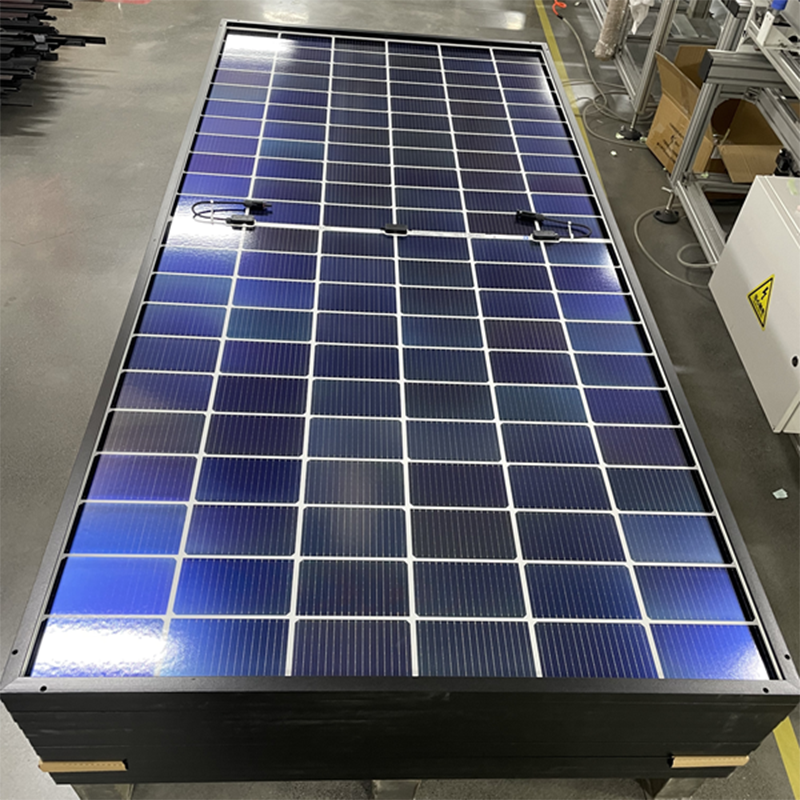
Panel Wattage: This defines the maximum output of individual modules. The standard output range of modern residential equipment typically falls between 350W and 400W+. Selecting a high-efficiency Solar Panel can alter the final array size footprint.
Once you calculate your required System Size in kilowatts (kW), you convert it to a specific panel count. You multiply the System Size (kW) by 1,000 to find total watts. Finally, divide that number by the wattage rating of the individual panel you plan to use. This final step reveals the exact number of units you need to purchase.
Every roof presents a unique operating environment. You must evaluate specific environmental and hardware variables to size your setup correctly. Standard panels provide reliable energy generation at an accessible entry point. However, high-efficiency panels generate more electricity per square inch. If you have a smaller roof, you might necessitate higher wattage or high-efficiency panels. These premium modules increase hardware costs but require fewer units to hit your energy target.
Environmental degradation heavily influences actual output. Real-world systems do not operate under sterile lab conditions. You must account for a standard 10% to 20% system loss. High temperatures naturally reduce photovoltaic efficiency. Wiring resistance and inverter conversions also siphon off small amounts of power. This collective loss is expressed through the Production Ratio variable we discussed earlier. Accurate sizing always anticipates these real-world losses rather than ignoring them.
Roof architecture plays a massive role in final system scale. Installers look closely at azimuth, which is your roof's orientation relative to the equator. In the Northern Hemisphere, a true south-facing roof yields maximum production. East and west orientations generate less power, requiring you to install additional units to hit the same annual kWh target. Roof pitch also changes how sunlight strikes the glass. Extremely steep or entirely flat roofs may require specialized mounting hardware to optimize the tilt angle.
Let us look at standard usage tiers to help you visualize typical installation sizes. We base these estimates on a standard average of 400W panels and a moderate U.S. climate receiving 4 peak sun hours daily. We assume a standard production ratio of roughly 0.80 for realism.
If your monthly bill hovers around $100, you likely consume approximately 600 kWh per month. Generating 7,200 kWh annually requires roughly a 5kW system. In our moderate climate scenario, this math yields roughly 12 to 14 panels. This compact footprint easily fits on most standard suburban rooftops.
A household paying $150 monthly uses about 900 kWh per month. To offset this 10,800 kWh annual demand, you need a slightly larger footprint. Our calculation yields roughly 19 to 22 panels. This tier represents the average American home.
Larger homes with $250+ monthly bills consume approximately 1,500 kWh per month. Pushing past 18,000 kWh annually demands robust infrastructure. This math yields between 31 and 36 panels. Systems of this size often require multi-plane installations across different roof sections.
You can use these baseline tiers for self-identification. Spot-check installer quotes against these rough numbers. If your bill is $100 but an installer suggests 25 panels, you know they are either overestimating your needs or ignoring your actual consumption data.
Many homeowners believe that a "100% powered" system guarantees electricity during blackouts. This is a myth. A standard grid-tied setup shuts down entirely during a power outage for strict safety reasons. If the system remained active, it would push live electricity backward into the grid. This scenario presents a fatal hazard for utility workers attempting to repair downed lines. Even if the sun shines brightly, your home loses power.
Net metering solves the imbalance between daytime production and nighttime usage. Under this policy, the utility grid acts as a virtual battery. Your system overproduces power during sunny summer afternoons. You send this excess energy into the grid in exchange for utility credits. When night falls, you draw power from the grid and use those credits to pay for it. A well-sized system banks enough credits during summer months to offset winter shortages.
If your goal involves true off-grid capability or resilience against blackouts, you must acknowledge the battery caveat. Generating equipment alone remains insufficient for energy independence. Adding battery storage changes the system architecture entirely. Batteries isolate your home from the grid during an outage, forming a microgrid. You must carefully size batteries to handle high-surge appliances. A standard Solar Panel array paired with adequate storage transforms your home into a truly self-sustaining property.
Applying shortlisting logic helps you navigate vendor proposals effectively. You need clear criteria for comparing initial quotes. Reputable installers should always calculate system size based on your 12-month energy profile. Reject proposals built on a single one-month snapshot. Summer bills look drastically different from winter bills. Ask each vendor to explain the peak sun hours and production ratio they used for your specific address.
Vetting guarantees protects you from future underperformance. Most companies highlight their hardware warranties, which cover physical defects for 25 years. However, you should strongly recommend asking vendors for a "Production Guarantee." This legally binding document promises that the system will generate a specific amount of kWh annually. If the array fails to produce the promised power, the installer must compensate you or add equipment to bridge the gap.
Consider future-proofing your home during the design phase. Think about upcoming lifestyle changes. Do you plan to purchase an EV soon? Will you switch from a gas furnace to an electric heat pump? Discuss these plans with your installer immediately. It makes practical sense to slightly oversize the system now. Adding two or three extra panels during the initial installation remains incredibly efficient. Paying for a costly multi-phase expansion later requires new permits and complicated rewiring.
Take proactive next steps today. Pull your utility data and calculate your annual kWh consumption. Use the formulas provided above to estimate your required system size. Then, reach out to local, well-reviewed installers. Request detailed, site-specific quotes using your newly calculated baseline. You enter these conversations from a position of strength and informed data.
Determining panel counts is an exact science, not a guessing game. Sizing relies heavily on your personal historical usage, geographic sun exposure, and specific hardware wattage.
Always verify system sizes against a full 12-month energy profile. Never base decisions on square footage or single-month billing statements.
Prioritize data-driven quotes over generic estimates. Using your calculated kWh baseline empowers you during vendor negotiations and protects you from upselling.
Account for future energy needs today. Oversizing slightly for upcoming EVs or heat pumps saves you from expensive retroactive expansions.
A: Yes, you can run central air conditioning on renewable energy. However, central AC units demand high surge wattage to start the compressor. They also consume significant sustained power. Running an AC frequently increases your annual kWh consumption drastically. You must size your system to accommodate this heavy load, which directly increases your total panel count. If you rely on AC at night, you will depend on net metering credits or battery storage.
A: Limited roof space requires strategic hardware choices. You can opt for high-efficiency premium panels. These modules generate more power per square inch, requiring a smaller physical footprint. If roof space remains too small, you can explore ground-mounted systems in your yard. Alternatively, you can accept a partial bill offset. Covering 60% of your usage still provides substantial utility relief.
A: You can expand your array later, but it often proves complicated. Your original central inverter possesses strict capacity limits. Adding a new Solar Panel expansion might require upgrading the inverter or adding microinverters. Multi-phase installations incur new permitting fees, labor charges, and scaffolding costs. Installing extra capacity upfront remains much more cost-efficient.
A: Yes, all photovoltaic cells degrade slightly over time. The industry standard marks an average annual degradation rate of roughly 0.5%. After 25 years, a high-quality module should still produce at least 80% to 85% of its original day-one output. Reputable installers factor this long-term degradation into their 25-year lifespan calculations to ensure you meet your energy needs decades later.



