


Views: 0 Author: Site Editor Publish Time: 2026-07-12 Origin: Site


Homeowners often view renewable energy marketing with a healthy dose of skepticism. Advertisements frequently promise fully eliminated electric bills overnight. However, the reality of your savings relies on a strict mathematical equation, not magic. Surging utility rates certainly make alternative energy solutions look highly attractive to modern families. Despite this appeal, the substantial upfront capital required means you must treat this transition as a serious financial investment. Deciding to install a Solar Panel system requires careful, objective analysis of costs versus long-term payoffs. True savings depend entirely on the intersection of your local utility costs, your home’s specific viability for sunlight capture, available government tax incentives, and how you ultimately choose to finance the hardware. Understanding these individual elements separates a highly profitable home upgrade from a frustrating, prolonged expense. We will guide you through the exact formulas, realistic variables, and critical financing choices needed to project your true return on investment accurately.
Average Payback Period: Most residential solar panel systems reach their break-even point in 6 to 10 years, depending on local energy rates and incentives.
Lifetime Savings: Over a standard 25-year lifespan, homeowners typically save between $10,000 and $30,000 net, after factoring in initial costs and system degradation.
The Rule of Utility Rates: The higher your current utility rate (and its historical inflation rate), the faster your return on investment (ROI).
Financing Matters: Cash purchases yield the highest lifetime savings. Solar loans offer a middle ground, while leases/PPAs provide immediate monthly savings but sacrifice long-term ROI.
Understanding your return on investment always starts with determining the precise break-even point. This specific metric reveals exactly when your initial capital outlay pays for itself completely through reduced monthly energy bills. You calculate this payback period by taking your total system cost (after applying all local and federal incentives) and dividing it by your projected annual electric bill savings. For example, if you spend exactly $15,000 on a new Solar Panel array and save $1,500 annually on electricity, your break-even point arrives in exactly 10 years.
When forecasting these financial numbers, industry professionals universally use a standard 25-year projection. Most tier-one equipment carries robust warranties lasting exactly this long. However, these financial projections must account for harsh physical realities. Hardware does not produce the exact same amount of power in year 20 as it does on day one. You must meticulously factor in industry-standard degradation rates. Most modern arrays lose about 0.5% of their energy conversion efficiency annually. Building this slight, natural decline into your math ensures you create a realistic lifetime savings model rather than an artificially inflated one.
Finally, you need to budget for expected hardware maintenance. While the panels themselves have zero moving parts and require minimal upkeep, the system heavily relies on an inverter to convert raw DC power into usable AC power for your home appliances.
If you choose a traditional central string inverter, plan to replace it between years 12 and 15.
If you opt for microinverters attached to each module, they typically last the full 25-year lifespan but demand higher initial capital.
Include an estimated $1,000 to $2,000 in your spreadsheet for this mid-life maintenance to keep ROI projections perfectly accurate.
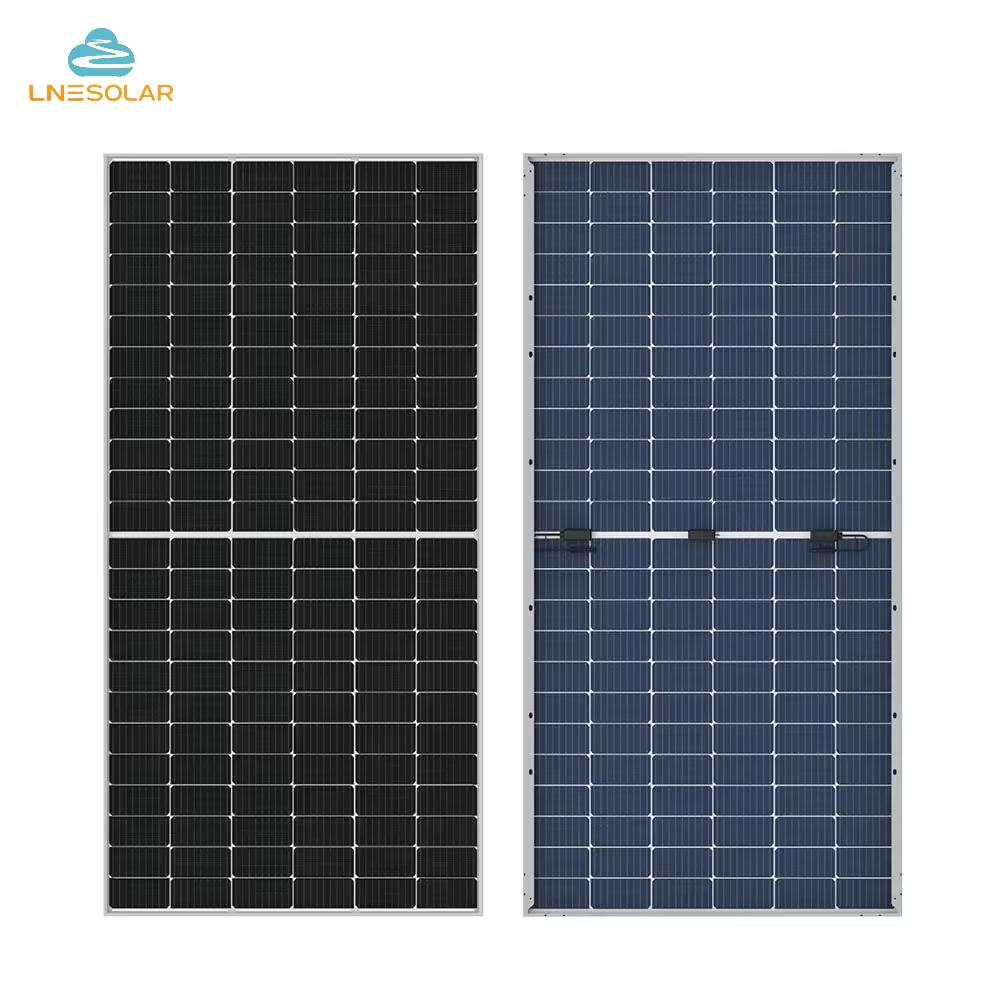
Your localized geographic environment heavily influences your overall financial gain. Four distinct, unchangeable variables dictate how quickly your investment matures into pure profit.
First, examine your local utility rates and rate structures closely. Flat-rate utility pricing offers straightforward, predictable math. Conversely, Time-of-Use (TOU) rates or tiered pricing complicate your projections. Under TOU billing, electricity costs significantly more during peak evening hours when families return home. High-cost energy markets naturally yield the absolute highest financial savings. If you live in a region charging 30 cents per kilowatt-hour, your array pays for itself twice as fast as someone paying only 15 cents.
Second, you must understand your local Net Energy Metering (NEM) policies. Utilities use net metering programs to credit you for excess daytime power you send back to the local grid. Unfortunately, regulatory policies are shifting rapidly nationwide. California’s highly publicized NEM 3.0 drastically reduced the financial compensation rate for exported energy. Less favorable NEM policies mean standard payback models look less attractive unless you adapt your strategy by adding home battery storage.
Third, your specific roof architecture and daily sun exposure strictly cap potential energy generation. The ideal setup in the Northern Hemisphere features a purely south-facing azimuth. Your roof pitch also matters for capturing optimal sunlight angles. Furthermore, any shading from nearby mature trees, tall chimneys, or adjacent multi-story buildings directly limits maximum output. A partially shaded Solar Panel setup generates considerably less daily power, extending your break-even timeline significantly.
Fourth, analyze your household energy consumption patterns objectively. Family lifestyles change, and so do domestic energy needs. Adding a new electric vehicle (EV) to the garage or switching from a gas furnace to an electric heat pump alters your baseline consumption drastically. You must evaluate these future lifestyle changes beforehand. Precise system sizing by your contractor ensures you cover your current and future usage perfectly to maintain maximum long-term savings.
How you pay for your system drastically impacts the final financial outcome. Homeowners typically choose between three main financing strategies. Each carries distinct advantages and notable drawbacks depending on your liquid asset availability.
Financing Strategy | Primary Advantages | Main Disadvantages |
|---|---|---|
Upfront Cash Purchase | Yields the highest total savings. You gain immediate 100% ownership. You avoid all bank interest fees and dealer markups. | Requires a significant amount of liquid capital upfront. It temporarily ties up personal funds you could potentially invest elsewhere. |
Solar Loans | Lowers the initial financial barrier to entry. You retain full ownership and remain eligible for all lucrative tax credits. | High dealer fees and compounding interest rates eat into your total lifetime savings. You still carry structured monthly debt. |
Leases and PPAs | Offers zero upfront cost out of pocket. The provider formally handles all maintenance. You see immediate monthly cash-flow savings. | Provides the lowest overall financial benefit. You do not receive federal tax credits. It can severely complicate selling your home later. |
An upfront cash purchase remains the undeniable gold standard for maximizing ROI. Because you skip bank interest rates entirely, every single kilowatt-hour generated translates directly into pure, uncompromised savings.
Solar loans provide a highly popular middle ground for families lacking massive cash reserves. They allow you to swap your unpredictable utility bill for a predictable, fixed loan payment. While you thankfully keep the federal tax benefits, hidden dealer fees often inflate the principal loan amount significantly. Lenders frequently charge origination fees reaching up to 30% of the cash price. Always ask your installer for the direct cash price versus the financed loan price to see this glaring discrepancy clearly.
Leases and Power Purchase Agreements (PPAs) essentially rent the hardware to you. They remove the heavy burden of long-term maintenance. However, the third-party leasing company rightfully claims the lucrative federal tax credit. Furthermore, if a future homebuyer refuses to assume the remainder of your multi-decade lease contract, selling your property becomes incredibly difficult.
Government incentives exist explicitly to make renewable energy accessible to average households. Utilizing them correctly can slash your gross installation cost by a third or more.
The Federal Investment Tax Credit (ITC) serves as the primary financial driver for most residential installations. Currently set at 30% by federal legislation, this lucrative program applies to the entire gross cost of your completed system. However, everyday consumers often misunderstand how it practically works. It is not a direct cash rebate or a physical check mailed to your front door. Instead, it acts as a non-refundable tax credit applied directly against your federal income tax liability. If your current tax bill is lower than your earned credit amount, the IRS allows you to roll the remainder forward into subsequent tax years.
Beyond the generous federal level, aggressively investigate state and local rebates. Combining state-level income tax credits and local utility cash rebates heavily reduces your initial financial burden. Additionally, some specific states participate in robust Solar Renewable Energy Certificates (SRECs) markets. SREC markets allow you to legally sell digital certificates generated by your system back to utility companies, creating an ongoing, predictable passive income stream.
We highly recommend consulting a certified public accountant (CPA) before signing any binding installation contracts. A licensed tax professional will thoroughly evaluate your unique financial situation. They ensure your household actually possesses sufficient tax appetite to utilize the federal and state credits fully. Proper upfront planning guarantees you successfully capture every available dollar of government-backed savings.
Evaluating a Solar Panel installation solely on current electric bills misses a critical piece of the complex financial puzzle. Generating your own daily power acts as a remarkably powerful hedge against broader economic unpredictability.
Utility rate inflation practically guarantees your future energy costs will rise relentlessly. Historically, domestic utility rates increase by an average of 3% to 5% annually depending on your specific region. You should frame your installation as a permanent, fixed-cost energy hedge. While your unprotected neighbors pay increasingly higher utility rates over the next two decades, your personal cost of generation remains locked in at the exact price you paid on day one. When projecting cumulative savings over 25 years, the passive "do nothing" scenario almost always costs families tens of thousands of dollars more.
Furthermore, installing a system directly impacts your real estate property’s marketability. Reliable national real estate data consistently shows that fully owned arrays generally increase a property’s resale value. Educated buyers willingly pay a premium for a modern home boasting pre-installed, debt-free energy generation. Even better, most states offer explicit local property tax exemptions. This means your increased home value does not trigger unfairly higher annual property tax assessments. Note carefully that this specific value appreciation only applies to owned systems, never leased ones.
Finally, you must consider the emerging solar plus storage factor. Adding a high-capacity lithium battery storage system fundamentally changes your financial timeline. Expensive batteries make excellent financial sense if you experience frequent neighborhood grid outages, need to perform TOU peak-rate shaving, or live in a state with strict net billing policies. However, if your utility still offers reliable 1:1 net metering, adding a battery unnecessarily extends your break-even payback period by several years.
Ultimately, harnessing the sun saves remarkably significant money for homes featuring unshaded roofs, high local energy rates, and ready access to favorable net metering policies. The mathematical equation proves highly favorable when these three core conditions align properly.
However, smart homeowners must remain constantly vigilant. We strongly warn against aggressive door-to-door sales tactics promising unrealistic, overnight returns. Always thoroughly assess your current roofing infrastructure first. A roof older than 10 to 15 years likely needs full replacement before installing any new equipment. Replacing aging shingles beforehand helps you avoid paying costly removal and reinstallation fees later.
Your absolute next step involves thorough data gathering. We highly recommend securing three distinct, competitive quotes from vetted local installers. Ask each individual contractor specifically for their transparent cash versus loan breakdown to reveal any hidden dealer fees. Finally, demand a precise, software-driven shading analysis to guarantee your projected energy production flawlessly matches reality.
A: Yes, they can still be a sound financial decision. While you might not reach the 6-to-10-year break-even point on energy savings alone, owned systems increase your home’s resale value. Buyers often pay a premium for properties with reduced electric bills. You typically recoup the remaining investment through this increased property equity when you sell.
A: Arrays do not generate power at night. However, grid-tied systems rely on net metering. The excess power you generate during the day is sent to the grid, earning you credits. Your utility uses these credits to offset the cost of the electricity you pull at night. Alternatively, a battery storage system can power your home overnight directly.
A: You should budget for minor maintenance over 25 years. This includes occasional professional panel cleaning if you live in a dusty area. More importantly, string inverters usually require replacement around year 15. Finally, ensure your roof is in excellent condition to avoid expensive panel removal for future roof repairs.
A: Owning your power generation protects you from utility rate hikes. When utility companies increase their prices, your savings actually grow because you avoid paying those higher rates. If they change their net metering policies, existing solar customers are usually protected by "grandfathering" clauses, locking in the favorable original rules for a set period.



