


Views: 0 Author: Site Editor Publish Time: 2026-09-02 Origin: Site


The utility-scale solar sector is aggressively pursuing a significantly lower Levelized Cost of Energy (LCOE). Developers face mounting pressure to extract every possible watt from available land while simultaneously combatting inflated installation labor rates. We are currently witnessing a major industry inflection point. Projects are shifting rapidly from traditional 500W and 600W benchmarks into the unprecedented 700W+ module era. Achieving this vital 700W+ milestone demands a combined leap in physical wafer dimensions and internal cell efficiency. Relying on legacy technology simply will not cut it in today's highly competitive energy market. The 210mm TOPCon solar cell has emerged as the definitive architecture for high-yield deployment. In this article, you will learn the exact mechanics behind this powerful format. We will explore how it fundamentally redefines utility-scale economics. You will also discover actionable procurement criteria to confidently evaluate these high-power modules.
Business Outcome: 700W+ modules powered by 210mm cells demonstrably reduce Balance of System (BOS) costs through lower cabling, mounting, and labor requirements per megawatt.
Technology Synergy: The combination of an N-type TOPCon passivation layer and a massive 210mm surface area solves the power-density ceiling of previous generations.
Risk Mitigation: Modern dual-glass encapsulation and refined frame designs effectively neutralize the mechanical fragility historically associated with ultra-large formats.
Clear Evaluation Path: Procurement viability hinges on verifying first-year degradation caps, temperature coefficients, and certified mechanical load tolerances.
Rising land acquisition restrictions and skyrocketing labor costs require developers to maximize power output per square meter. Standard 500W modules consume vast amounts of physical space. They also demand immense manual labor for panel handling, mounting, and complex wiring. This unsustainable dynamic forces solar developers to rethink basic project layouts entirely. You simply cannot scale modern utility farms using outdated, space-inefficient technology.
Deploying 700W+ modules fundamentally alters Balance of System (BOS) economics on a massive scale. By increasing the energy density per panel, you need significantly fewer physical panels to reach your total project capacity. Fewer panels translate directly into fewer electrical strings to wire and connect. It drastically reduces the total number of single-axis trackers required across the site layout. Every single pile driven into the earth requires specialized machinery, skilled operators, and extensive topographic surveying. When you transition to 700W+ modules, the total structural steel requirements plunge. You essentially pack more active generation capacity onto a shorter tracker length. This powerful ripple effect slashes expensive heavy cabling costs, reduces land grading and trenching requirements, and cuts down field installation hours. BOS costs drop heavily as a direct, measurable result.
However, long-term financial success requires much more than just high output metrics on a factory datasheet. A genuinely successful 700W+ implementation must deliver lower upfront capital expenditure without accelerating long-term hardware degradation. These massive panels must carefully maintain strict lifecycle yields exceeding 25 to 30 years in the field. You cannot irresponsibly trade short-term installation savings for long-term reliability failures. True utility-scale success carefully balances massive power density with highly predictable lifetime performance under harsh environmental conditions. The module must perform predictably year after year to ensure your initial financial LCOE models remain entirely accurate.
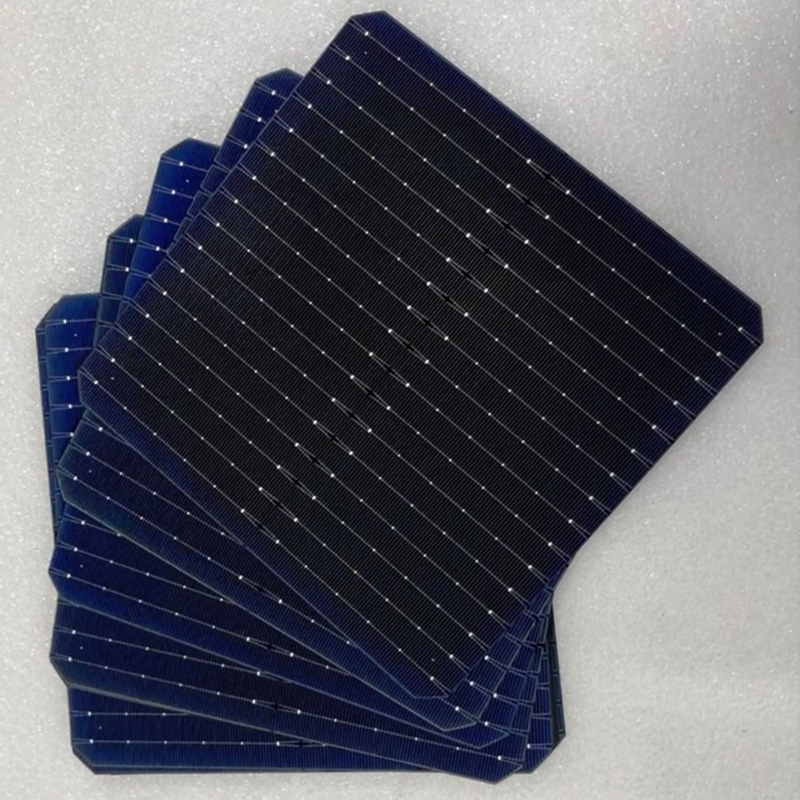
Let us break down the fundamental physics and the underlying mathematical formula for module power generation. Total module output essentially equals Wafer Area multiplied by Cell Efficiency and Packing Density. You cannot practically reach the 700W threshold by tweaking just one of these variables in isolation. The physical dimension of the silicon plays a crucial, foundational role. The massive 210mm (G12) footprint provides an exceptionally high baseline current. It reliably delivers a massive active energy-gathering area that smaller format designs simply cannot match physically.
Advanced chemistry and atomic structure handle the remaining aspects of the high-power equation. Integrating an advanced N-type Solar Cell architecture aggressively minimizes internal carrier recombination losses. Unlike older P-type materials, N-type silicon uses phosphorus doping. This specific manufacturing process completely eliminates the boron-oxygen defects responsible for early panel degradation. Specifically, Tunnel Oxide Passivated Contact (TOPCon) technology introduces an ultra-thin oxide layer. This critical passivation layer boosts bifaciality significantly by allowing scattered light to be harvested much more effectively from the backside of the module.
This chemical upgrade pushes the raw conversion efficiency well past the old physical limitations of the PERC plateau. Combining a massive physical wafer size with advanced surface passivation safely enables stable 700W+ output. It entirely eliminates the previous voltage bottlenecks heavily capping older, smaller modules. The modern solar industry relies heavily on this specific technological synergy to move forward. We see this exact combination reshaping how system engineers calculate expected energy yields across varying global latitudes.
Solar wafer formats vary wildly in their real-world capabilities and ultimate structural limits. Let us deeply examine the practical constraints of today's popular architectures.
First, consider the widely used 182mm format. Even when fully loaded with advanced TOPCon efficiency upgrades, an M10 TOPCon Solar Cell structurally caps out well below 700W. They typically hover strictly in the lower to mid-600W range due to unavoidable spatial limits. Because the physical surface area remains inherently smaller, you require significantly more modules to generate a single megawatt. This mathematical limitation directly negates many of the structural BOS cost savings we discussed earlier.
Next, we have the rectangular alternative rapidly entering the market. The G12R Solar Cell serves as a highly effective transitional standard. Manufacturers design it specifically for high-cube container-shipping optimizations. It fits perfectly onto standard transport pallets, significantly reducing logistical shipping overhead. It also works exceptionally well for commercial rooftop applications where installation space gets severely constrained. However, it still carries a slight power-ceiling disadvantage compared to a full, uncompromised square wafer.
Finally, properly evaluate the full-sized G12 format. The entirely square G12 TOPCon Solar Cell proudly stands as the undisputed mathematical baseline for true utility-scale 700W+ panels. It provides a highly superior operating voltage and operating current profile. This specific electrical profile matches perfectly with modern centralized high-power string inverters, which can now easily handle 40A+ inputs. The full G12 avoids the power compromises found in smaller or purely rectangular options.
Wafer Architecture Performance Comparison
Format Standard | Wafer Dimensions (mm) | Typical Maximum Module Power | Primary Deployment Application |
|---|---|---|---|
M10 TOPCon | 182 x 182 | 600W - 630W | Distributed Generation / General Utility |
G12R TOPCon | 210 x 182 | 630W - 680W | Optimized Shipping / C&I Rooftops |
G12 TOPCon | 210 x 210 | 700W+ | Mega-Scale Utility High Yield |
Industry skepticism naturally follows the rapid introduction of ultra-large modules. Solar developers frequently raise intense concerns regarding microscopic cell cracking and wind load vulnerability. Hot-spot risks also consistently top the list of critical engineering worries. These remain entirely valid mechanical concerns for massive glass surface areas exposed directly to harsh elements.
Tier-1 manufacturers solve this through highly robust, modernized encapsulation methods. Advanced 700W+ modules rely heavily on rugged dual-glass designs rather than traditional glass-backsheet combos. Dual-glass encapsulation provides absolutely necessary structural rigidity against heavy dynamic wind loads and static snow loads. Modern factories also use advanced non-destructive laser cutting techniques. This critical manufacturing step uses precise thermal stress to cleave the cells cleanly. It totally prevents microscopic edge defects during the necessary cell-halving process. Ultimately, the rigid dual-glass structure prevents severe micro-cracks while actively improving back-side bifacial yield through better ambient light transmission.
Thermal dynamics provide another crucial layer of continuous operational protection. Huge panels generate immense localized heat in harsh desert climates. When ambient temperatures soar above 40°C, traditional panels experience severe voltage drops. Because TOPCon technology features a vastly superior, much lower temperature coefficient around -0.29%/°C, it retains significantly more operating voltage than older P-type variants sitting at -0.34%/°C. Over a 100MW plant, this seemingly tiny thermal difference equates to thousands of extra megawatt-hours generated during peak summer pricing events. It actively prevents dangerous thermal runaway events in dense large-format deployments. You secure highly consistent energy yield even in the most extreme, blistering thermal environments.
Choosing the right supplier for mega-scale projects demands a strict, data-based evaluation framework. Procurement teams cannot simply rely on marketing wattage labels. You must scrutinize the underlying engineering data and independent lab results.
Start by demanding incredibly strict long-term degradation thresholds. Advanced N-type modules must strictly meet very specific warranty benchmarks to justify their large-scale deployment. Look closely for a guaranteed first-year degradation rate of 1.0% or completely less. Furthermore, the annual degradation rate should absolutely not exceed 0.40% over an extended 30-year operational span.
Next, confidently mandate uncompromising third-party validation. Instruct your buying teams to demand accelerated testing data from highly reputable labs like PVEL or RETC.
Thoroughly check specific testing parameters for mechanical stress tolerance on massive 210mm formats under heavy wind loads.
Vigorously verify total resistance to Potential Induced Degradation (PID) under high system voltage conditions.
Strongly confirm absolute immunity to Light and Elevated Temperature Induced Degradation (LETID).
Finally, deeply evaluate supply chain maturity before signing contracts. Select reliable manufacturing partners actively operating vertically integrated production facilities. They should tightly control the entire ingot-to-module production line specifically tailored for massive 210mm sizes. Vertical integration ensures remarkably consistent cell quality across massive megawatt orders. It eliminates the cell mismatch issues common when brands buy wafers from third parties. It also fundamentally helps you completely avoid sudden bottleneck delays during your peak project construction seasons.
The rapid industry leap to 700W+ modules represents a stark architectural necessity. It is certainly not just a transient marketing gimmick. This evolution relies heavily on massive 210mm N-type silicon technology to relentlessly drive down overall project costs.
Always prioritize comprehensive LCOE modeling over simplistic, upfront unit-cost module comparisons.
Properly validate the long-term mechanical durability of modern dual-glass structural designs before purchasing.
Carefully ensure manufacturer warranties strictly meet the necessary N-type degradation thresholds.
Review third-party lab data to confirm structural readiness for extreme weather events.
Do not let outdated specifications bottleneck your next major utility-scale deployment. Proactive developers clearly understand that maximizing land use requires fully embracing these larger, more efficient architectures. We recommend taking immediate action. Reach out to qualified Tier-1 manufacturers today. Request full technical datasheets and initiate pilot-string testing to physically see the 700W+ difference firsthand on your own project sites.
A: No. Due to physical surface area limits, M10 modules top out in the lower-to-mid 600W range. Reaching 700W requires the larger footprint of a G12/210mm cell.
A: G12 refers to a standard 210mm × 210mm square-like wafer, maximizing area for peak 700W+ output. G12R is a rectangular variation (e.g., 210mm × 182mm) designed to optimize shipping container packing efficiency, usually yielding slightly lower total module wattage than full G12.
A: No. When manufactured correctly with N-type silicon and dual-glass framing, they exhibit lower degradation (zero LID and highly resistant to LeTID) compared to legacy P-type PERC panels.
A: Yes, but structural review is required. Most tier-1 tracker manufacturers have updated their mounting designs and wind-stow parameters specifically to accommodate the increased surface area of 210mm modules.



