


Views: 0 Author: Site Editor Publish Time: 2026-10-07 Origin: Site


Solar module degradation poses a critical risk to energy project returns globally. Utility-scale and commercial projects demand predictable, uninterrupted power generation to remain viable. Early-life performance losses can quickly derail complex financial models. Two specific mechanisms drive this uncertainty for developers. Light-Induced Degradation (LID) and Light and Elevated Temperature-Induced Degradation (LeTID) systematically damage cell efficiency. To combat these inevitable losses, the solar industry is shifting rapidly. Developers now prefer N-type TOPCon (Tunnel Oxide Passivated Contact) architectures over legacy P-type PERC panels. This technological transition represents a necessary evolution for minimizing degradation. It secures long-term asset value in a highly competitive market.
This article provides procurement teams, EPCs, and project developers an actionable framework. You will discover exactly how TOPCon cell technology structurally neutralizes early-life degradation. We also explore how minimizing these risks improves your long-term Levelized Cost of Energy (LCOE). You can use this evidence-based knowledge to optimize procurement strategies and secure better financing terms for your upcoming deployments.
Elimination of BO Defects: The fundamental shift to N-type Solar Cell chemistry replaces boron with phosphorus, virtually eliminating the Boron-Oxygen defects that cause traditional LID.
LeTID Resilience: Independent lab data confirms that TOPCon solar cell LID and LeTID rates are negligible, safeguarding long-term module performance under high temperatures.
Superior Degradation Warranties: TOPCon technology allows manufacturers to offer <1% first-year degradation and <0.4% annual linear degradation, directly improving project financial modeling.
Form Factor Flexibility: Scaling this technology through M10 TOPCon Solar Cell, G12 TOPCon Solar Cell, and G12R TOPCon Solar Cell formats allows developers to optimize Balance of System (BOS) costs without increasing degradation risks.
Utility-scale energy projects rely entirely on highly accurate yield predictions. Financiers build their risk models using P50 and P90 generation probability metrics. Sunlight exposure triggers Light-Induced Degradation during the very first hours of operation. Over several years, high ambient temperatures provoke LeTID in susceptible module architectures. These twin mechanisms compound generation losses unexpectedly.
Legacy P-type panels typically suffer a 2% to 3% initial degradation rate. This sudden performance drop forces project developers to recalibrate their revenue expectations early. It extends Return on Investment (ROI) timelines significantly. It also creates operational blind spots for asset managers tracking string-level performance. When panels degrade faster than predicted, debt service coverage ratios fall under pressure. Plant operators must then scramble to explain underperformance to their investment partners.
Today, successful PV procurement requires stricter technical benchmarks. You must demand verifiable, near-zero first-year degradation from your suppliers. Minimizing initial efficiency drops helps secure favorable project financing from risk-averse lenders. It also maximizes the total lifetime asset value for your portfolio. Driving down your ultimate LCOE depends on mitigating these specific thermal and light-induced vulnerabilities before installation begins.
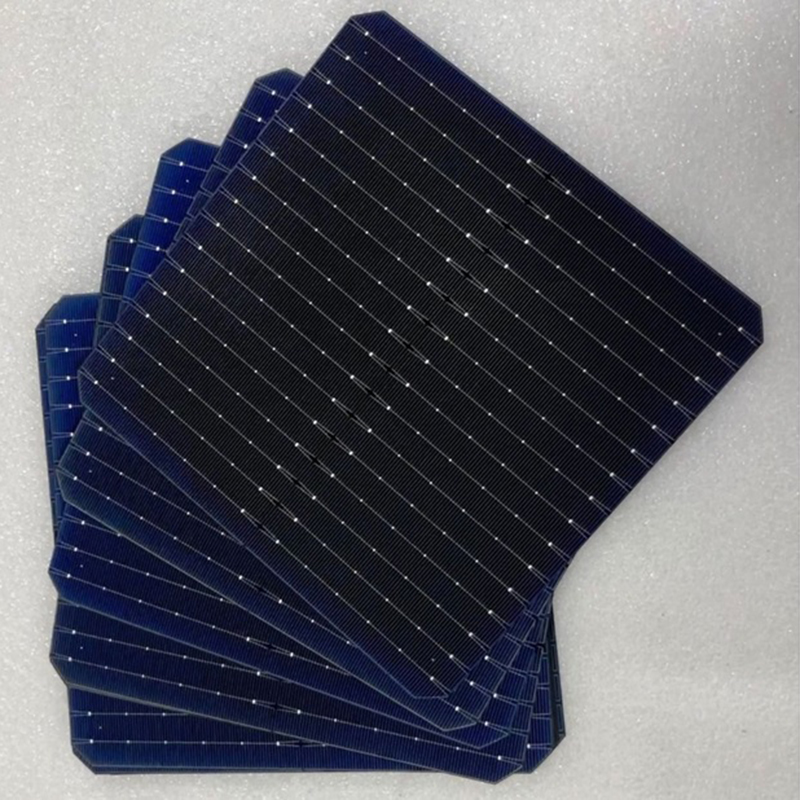
We must compare core silicon chemistries to understand the TOPCon structural advantage. Legacy P-type cells utilize boron to dope their silicon base layers. Boron reacts aggressively when exposed to oxygen and sunlight simultaneously. This specific chemical reaction creates physical recombination centers inside the crystal lattice. These defect centers trap generated electrons before they can exit the panel. This trapping mechanism causes the well-documented power loss known as LID.
The TOPCon architectural advantage changes this dynamic entirely. A modern N-type Solar Cell utilizes phosphorus instead of boron for base layer doping. Phosphorus does not react negatively to oxygen under direct sunlight. This simple elemental substitution prevents the harmful boron-oxygen degradation sequence from ever occurring.
Engineers address complex LeTID risks using an ultra-thin tunnel oxide layer. They place a highly doped polysilicon layer directly behind the rear cell contacts. These advanced layers passivate the metal contacts to drive higher overall conversion efficiency. They also stabilize the silicon wafer against severe thermal and prolonged light-induced stress.
Independent lab testing methodologies firmly validate these evidence-oriented claims. Testing facilities track standardized open-circuit voltage levels under accelerated physical stress tests. Independent data from IEC 61215 and IEC 63202-1 testing standardizes these findings globally. The TOPCon structure consistently demonstrates near-zero degradation behavior under extreme simulated weathering conditions.
Table: Comparison of P-Type PERC and N-Type TOPCon Degradation Mechanics
Technical Specification | Legacy P-Type PERC | Advanced N-Type TOPCon |
|---|---|---|
Base Doping Element | Boron | Phosphorus |
Susceptibility to BO-LID | High (Recombination centers form quickly) | Negligible (No Boron-Oxygen reaction) |
Standard First-Year Degradation | 2.0% - 3.0% | < 1.0% |
Annual Linear Degradation | 0.45% - 0.55% | < 0.40% |
LeTID Vulnerability | Moderate to High (Requires specialized mitigation) | Very Low (Stabilized by tunnel oxide passivation) |
Mitigating TOPCon solar cell LID enables manufacturers to scale up wafer sizes safely. Historically, massive silicon wafers risked severe performance drop-offs near the perimeter edges. Improved tunnel oxide cell passivation effectively prevents these edge-related efficiency losses. Project developers can now align physical module dimensions directly with their specific yield targets.
You should evaluate these three dominant TOPCon configurations when designing your layout:
M10 TOPCon Solar Cell (182mm): This standardized size balances high energy yield and proven handling reliability. It offers excellent resistance to early-life degradation. The M10 format remains highly compatible with older tracker designs. It serves as an ideal baseline for widespread utility and commercial adoption.
G12 TOPCon Solar Cell (210mm): This massive configuration delivers maximum power output per individual module. It combines ultra-low N-type degradation limits with extreme surface areas. You need fewer total modules per string to reach capacity. This high-density efficiency aggressively drives down Balance of System (BOS) and installation labor costs.
G12R TOPCon Solar Cell (210R rectangular): Rectangular wafers represent a highly practical industry trend. They provide a precise spatial fit for shipping container optimization. You can pack more megawatts into every single shipping container. The G12R design also improves commercial rooftop spatial utilization considerably. It achieves these logistical wins while maintaining robust LID resistance.
Procurement teams must carefully verify specific factory claims during vendor selection. Marketing brochures often promise "zero LID" capabilities without providing sufficient technical context. You should demand rigorous third-party lab certifications before authorizing purchase orders. Look specifically for standardized IEC 61215 and IEC 63202-1 testing results. These specific international standards focus directly on isolating LID and LeTID resilience.
Use this practical checklist to evaluate prospective PV module suppliers:
Verify Independent Lab Certifications: Request the complete independent testing reports rather than basic summary sheets. Ensure the testing facility used proper accelerated weathering protocols.
Benchmark Warranty Terms: Acceptable TOPCon warranties guarantee a maximum 1% first-year degradation limit. Subsequent years should never exceed a 0.4% annual performance decline. You must contrast these modern metrics against legacy P-type PERC baselines.
Assess Manufacturing Maturity: Review the supplier's active production line history and factory output volume. New TOPCon facilities sometimes struggle to optimize their initial commercial runs. Early-stage batch defects can easily erase theoretical technology advantages.
Review Electroluminescence (EL) Imaging: Request sample EL images from the factory floor. These images prove the cells lack hidden micro-cracks before shipping.
Check Inverter Compatibility: Ensure your selected string or central inverters can handle the specific operating currents. Larger G12 configurations produce higher currents requiring matched electrical equipment.
Project developers must constantly weigh CapEx constraints against long-term OpEx generation benefits. Advanced TOPCon modules typically carry a marginal upfront cost premium today. They cost slightly more per watt than remaining P-type inventory on the market. However, financial decision-makers must look far beyond initial purchasing prices.
The yield recovery timeline heavily favors the N-type technology upgrade. Preventing a 2% initial LID loss changes your financial math entirely. Imagine a 100 MW solar plant retaining an extra 2 MW of capacity during year one. The TOPCon panels also feature a significantly improved high-temperature coefficient. They generate more power during extreme summer heatwaves than older technologies.
These specific operational advantages compound significantly over a 25- to 30-year lifecycle. The extra generated kilowatt-hours easily offset your initial capital expenditure increase. The denominator in your LCOE equation grows substantially larger over three decades.
We recommend establishing a strict shortlisting logic for large-scale procurement. You can confidently justify TOPCon selection to your financial stakeholders using enhanced bankability metrics. Rely entirely on predictable, long-term generation data for your investment models. High-efficiency modules ensure your power plant remains highly competitive as electricity markets evolve.
The global industry shift toward TOPCon technology relies heavily on structural reliability. It delivers superior financial predictability for complex, large-scale energy installations. Eliminating catastrophic early-life degradation secures your long-term revenue generation targets. Phosphorus-doped N-type silicon fundamentally protects your physical assets from rapid sunlight damage and thermal stress.
Buyers must maintain stringent quality control standards during the transition. Encourage your procurement teams to request strict degradation testing data routinely. You should demand comparative LCOE modeling from all shortlisted module suppliers. Validate these metrics carefully before finalizing your multi-megawatt procurement contracts.
A: The industry standard benchmark for TOPCon solar panels is strictly less than 1% for first-year degradation. This represents a massive improvement over older P-type technologies, which often suffered initial losses between 2% and 3%. This strict limitation directly protects early project revenue.
A: Both TOPCon and Heterojunction (HJT) utilize advanced N-type silicon chemistry. Because they substitute phosphorus for boron, both architectures effectively eliminate traditional Boron-Oxygen LID. They both offer exceptional early-life performance and robust long-term reliability under varying environmental conditions.
A: No. Cell size does not inherently alter the fundamental N-type chemical resistance to LID. Advanced passivation techniques protect the larger surface area effectively. While handling larger wafers requires careful logistics, their physical dimensions do not increase internal light-induced degradation risks.
A: Yes, though it is drastically reduced compared to older technologies. While considered negligible under standard conditions, poor manufacturing practices can still introduce thermal vulnerabilities. You must require high-quality production controls and independent lab testing to prevent LeTID entirely.



