


Views: 0 Author: Site Editor Publish Time: 2026-07-08 Origin: Site


Accurately forecasting the long-term ROI of a solar installation requires separating marketing claims from engineering realities. Buyers often hesitate when they cannot verify how long their investment will actually produce value. The truth is, a standard Solar Panel rarely fails abruptly. Instead, its lifespan is defined by a gradual decline in energy production known as degradation.
This article provides a pragmatic, data-driven look at how long your system will realistically produce usable power. We will explore hidden replacement costs, like inverters, and show you exactly how to read the fine print on warranties. You will learn actionable strategies to maximize energy yield over decades.
Industry-standard solar panels have a useful lifespan of 25 to 30 years, after which they still generate electricity, but at a reduced capacity.
The average degradation rate is 0.5% per year; premium panels degrade slower, impacting total energy yield over decades.
Solar inverters will likely need replacement before the panels do (typically around year 10–15), which must be factored into total cost of ownership.
Evaluating a system requires looking at two distinct warranties: the *equipment* (product) warranty and the *performance* (power output) warranty.
Industry professionals rarely use the term "end of life" to mean zero power output. A solar module does not simply turn off after 25 years. Instead, it reaches an economic threshold. This threshold occurs when power output drops below 80% of its original factory rating. At this point, the system might no longer offset your utility bill effectively.
The industry benchmark for this decline is the degradation rate. Most standard modules degrade by roughly 0.5% every year. Some premium options degrade at a slower pace, hovering around 0.25% to 0.3% annually. This seemingly small percentage difference creates massive production gaps over a quarter-century.
Consider a real-world example. You install a system rated for 10 kilowatts. If it experiences a 0.5% annual degradation rate, the math is straightforward. After 25 years, the equipment will still operate at roughly 87.5% capacity. It will generate 8.75 kilowatts under ideal sun conditions. It still produces highly usable electricity.
Top-tier manufacturers publish third-party tested degradation curves. You should always request these documents during vendor evaluation. These curves prove the manufacturer subjected their product to rigorous independent testing. Below is a simplified progression chart illustrating typical output decline over 25 years.
Years in Operation | Premium Module Output (0.3% loss/yr) | Standard Module Output (0.5% loss/yr) |
|---|---|---|
Year 1 (Post-LID) | 98.0% | 97.5% |
Year 10 | 95.3% | 93.0% |
Year 15 | 93.8% | 90.5% |
Year 20 | 92.3% | 88.0% |
Year 25 | 90.8% | 85.5% |
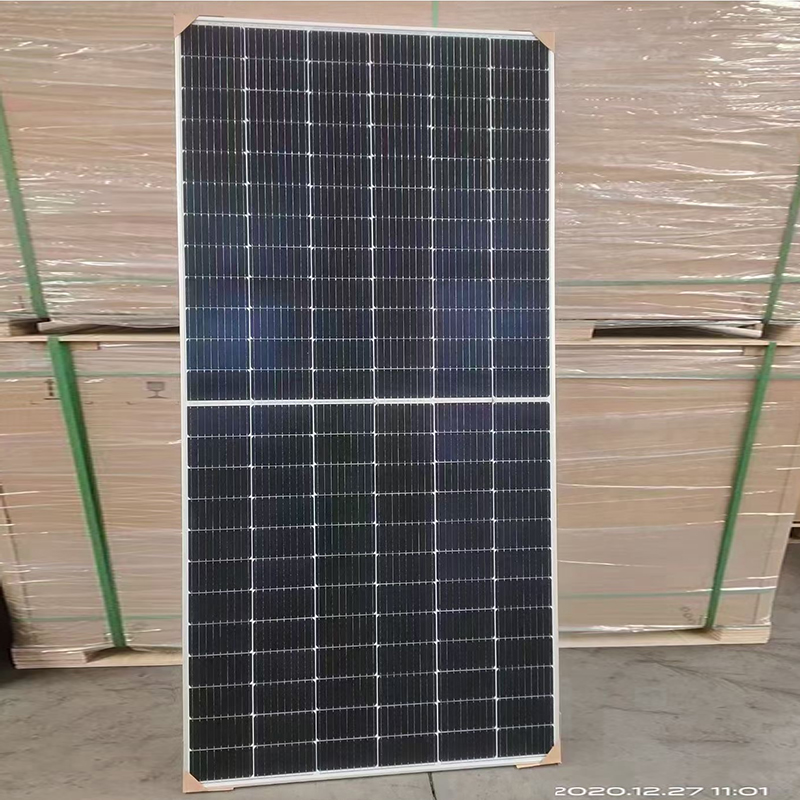
Not all solar equipment ages at the same rate. Engineering choices and environmental realities dictate how fast a Solar Panel degrades. Understanding these variables helps you select the right hardware for your specific climate.
Modern monocrystalline panels generally fall into two categories: N-type and P-type. N-type cells utilize phosphorus doping, while P-type cells rely on boron. P-type cells suffer from higher Light-Induced Degradation (LID) during their first few weeks in the sun. N-type cells avoid this boron-oxygen reaction. They offer higher efficiency and significantly longer lifespans.
Extreme temperature fluctuations place immense physical stress on solar equipment. Sunlight heats the materials during the day, causing them to expand. The sudden drop in temperature at night forces them to contract. Over decades, this daily expansion and contraction weakens internal solder joints. It can also degrade the protective backsheet. Installations in extreme desert climates typically exhibit slightly faster degradation.
Physical handling plays a crucial role. Micro-cracks often form during careless transport or clumsy roof mounting. These microscopic fractures remain invisible to the naked eye but interrupt electron flow. Furthermore, overly rigid mounting accelerates physical wear. Racking hardware must accommodate slight flexing during heavy winds. Poor installation practices drastically reduce useful lifespans.
Severe weather challenges physical durability. Hail, hurricane-force winds, and coastal salt-mist pose distinct threats. Reputable manufacturers design their modules to pass IEC 61215 standards. This international testing protocol ensures the glass withstands direct impacts from hail. If you live near the ocean, ensure your equipment holds a specific salt-mist corrosion certification. Salt rapidly destroys untreated aluminum frames.
Buyers often focus entirely on the modules on their roof. They overlook the most vulnerable component of the entire installation: the inverter. This device converts the direct current (DC) generated by the sun into alternating current (AC) for your home.
A critical discrepancy exists in system longevity. While rooftop modules easily last 25 years, central string inverters typically fail between years 10 and 15. The internal capacitors simply degrade from constant heat and heavy electrical loads. Microinverters offer a different timeline. Because they operate independently behind each module, they dissipate heat better. Microinverters often boast warranties up to 25 years.
You must actively budget for inverter replacement during your initial financial modeling. Assume you will need at least one new string inverter over a 25-year period. Failing to anticipate this expense ruins long-term return on investment projections. Ask your installer to estimate future inverter replacement costs upfront.
When a homeowner reports a completely dead system, the modules are rarely the culprit. System downtime almost always traces back to inverter failure or grid-tie component issues. The inverter acts as the brain of the operation. When it shuts down, energy production stops entirely. Regular inverter health checks prevent unexpected energy bills.
Marketing brochures prominently feature "25-Year Guarantees." However, these guarantees contain complex legal distinctions. Evaluating a system requires dissecting two separate warranty documents.
The product warranty covers physical manufacturing defects. It protects you against premature wear, water ingress, and environmental failure. The industry standard ranges from 12 to 15 years. Premium manufacturers push this to 25 years. If an aluminum frame snaps or a glass sheet spontaneously cracks, the product warranty applies.
The performance warranty guarantees a specific baseline of electrical production. It usually states the equipment will produce at least 80% to 92% of its original rating at year 25. If production drops faster than the guaranteed degradation curve, the manufacturer must compensate you. They either provide replacement modules or refund the difference in lost power.
You must read the fine print regarding labor. A manufacturer might gladly ship you a replacement unit. However, they might refuse to cover the labor required to climb your roof, remove the defective unit, and install the new one. Shipping heavy glass freight also costs money. Always prioritize warranties covering both hardware and replacement labor.
A 25-year warranty holds zero value if the manufacturer goes bankrupt in year five. The industry calls these "orphan systems." To avoid this nightmare, evaluate vendor bankability scores alongside warranty lengths. Look for Tier-1 manufacturers appearing on lists from reputable financial institutions like BloombergNEF. These companies possess the financial health to honor future claims.
Approaching year 25 forces owners into a decision matrix. The equipment still works, but efficiency has noticeably declined. You face three primary pathways for end-of-life management.
Many owners simply leave the aging system active. If the reduced energy output still covers your baseline electrical load, removal makes little sense. Leaving them on the roof avoids costly removal fees. You only need to intervene if roof repairs become necessary or if you significantly increase your daily energy consumption.
Repowering involves upgrading to modern, high-efficiency equipment using your existing infrastructure. Installers reuse the original conduit, wiring runs, and sometimes the racking rails. You only pay for the new modules and modern inverters. Repowering instantly dramatically boosts your energy yield. It revitalizes a legacy Solar Panel setup without starting from scratch.
The renewable energy sector faces a growing recycling challenge. You cannot simply throw legacy equipment into a standard landfill. The glass, aluminum frames, and silver wiring are highly recyclable. However, separating the silicon cells from the EVA encapsulant requires specialized thermal and chemical processes. These recycling facilities are currently scaling up across the globe. You should align your disposal plans with baseline U.S. Department of Energy and EPA directives, which mandate responsible recycling pathways.
You do not need to obsess over daily maintenance. However, implementing a few proactive protocols drastically extends system life. Preventive care catches minor issues before they cascade into costly failures.
We recommend conducting a visual inspection annually. You do not need to climb the roof. Use binoculars to scan the array from the ground. Look for heavy debris accumulation, like wet leaves trapped under the racking. Look for visible glass micro-cracks or discoloration on the backsheets. Ensure the structural integrity of the mounting hardware appears sound.
Most residential arrays rely entirely on rain for cleaning. Rain adequately washes away standard dust. However, specific environments demand active cleaning. If you live in an area experiencing heavy pollen, agricultural dust, or frequent wildfire ash, you must clean the glass. Use a soft brush and deionized water. Never use abrasive chemicals or hard bristles. Abrasive cleaning instantly scratches the anti-reflective coating, immediately voiding your product warranty.
Modern monitoring software represents your best defense against premature degradation. Microinverters and DC optimizers provide panel-level monitoring through a smartphone app. This software alerts you immediately if a specific module underperforms compared to its neighbors. Catching anomalous degradation early allows you to file a warranty claim long before it impacts your financial returns.
A residential solar array represents a reliable 25-to-30-year asset. System longevity relies heavily on component quality, realistic inverter lifespans, and strict adherence to proper installation practices. Recognizing that degradation is normal helps you set accurate financial expectations.
When evaluating quotes, apply strict shortlisting logic. Prioritize installers offering comprehensive labor warranties. Demand transparent degradation data. Never choose a vendor merely competing on the lowest day-one price, as cheap hardware fails early.
Your immediate next step is to review your current proposals. Scrutinize the performance warranty curves. Identify exactly who pays for inverter replacement and shipping costs in year 12. Armed with this data, you can secure a system designed to last decades.
A: No. They experience gradual degradation, producing slightly less power each year. Complete failure rarely occurs without a direct cause. Total sudden failure typically links back to physical impact damage, grid outages, or wiring failures at the inverter level.
A: Standard lithium-iron-phosphate (LFP) home battery systems last between 10 and 15 years. Their chemical cells degrade faster than silicon modules. You will likely need to replace your battery bank at least once before retiring the roof modules.
A: Tier-1 modules undergo strict testing to withstand 1-inch hail at 50 mph. Routine weather rarely impacts long-term lifespan. While exceptionally severe storms can cause micro-cracks, standard seasonal storms pose little threat to quality hardware.
A: No. Warranties are only as strong as the company backing them. A printed document cannot protect you from corporate bankruptcy. Buyers should strongly prioritize financially stable, highly bankable manufacturers to ensure future claims are honored.



