


Views: 0 Author: Site Editor Publish Time: 2025-12-14 Origin: Site


The world is increasingly looking towards sustainable energy sources to meet growing demands and reduce the impact of traditional energy production on the environment. Solar energy, harnessed through solar cells, is one of the most prominent and efficient renewable energy sources available today. But how exactly do solar cells produce electricity?
A solar cell, also known as a photovoltaic (PV) cell, is a device that converts sunlight directly into electricity using the photovoltaic effect. It is the basic building block of solar panels, which are made up of many individual solar cells connected together. These cells are made of semiconductor materials, typically silicon, that allow them to capture and convert sunlight into electricity.
The energy generated by solar cells can power everything from small devices like calculators and outdoor lights to large-scale applications such as homes, businesses, and even entire power plants. Solar cells are a cornerstone of solar energy technology, providing a clean, renewable energy source that is becoming increasingly important in the global effort to combat climate change.
At the heart of a solar cell’s ability to produce electricity is a phenomenon called the photovoltaic effect. This effect occurs when photons, or light particles, strike a material and cause electrons to become energized and move, generating an electric current. Here’s a step-by-step explanation of how the photovoltaic effect works within a solar cell:
When sunlight hits the surface of a solar cell, it is composed of tiny particles of light called photons. These photons contain energy, and when they come into contact with the solar cell, they transfer their energy to the material that makes up the cell. The most commonly used semiconductor material in solar cells is silicon because it possesses excellent properties for converting sunlight into electricity. Silicon is abundant, efficient, and has favorable electrical properties, making it the ideal material for photovoltaic applications.
As the photons strike the silicon, their energy is absorbed by the material. This energy excites the electrons in the silicon atoms and allows them to break free from their normal positions in the atomic structure.
Once the photons' energy is absorbed, the electrons in the silicon semiconductor material become excited. This means that the electrons receive enough energy from the photons to overcome the forces that normally hold them in place within the atom. As a result, these excited electrons are knocked loose and become free to move within the material.
This phenomenon is crucial because only free-moving electrons can generate an electric current. The more energy the photons provide, the more electrons become excited and freed, increasing the potential for generating electricity. The energy needed to release electrons from their atoms is typically in the range of 1.1 electron volts (eV), which is the bandgap of silicon.
When photons excite electrons, they create electron-hole pairs. This happens because when an electron is knocked out of its atom, a "hole" is left behind. The hole is essentially a vacancy where the electron once was. These electron-hole pairs are crucial to the photovoltaic effect, as they represent the two charges (negative and positive) that will eventually form the electric current.
In a solar cell, the electron moves freely, while the hole acts as a positive charge. This electron-hole pair plays an important role in the movement of electrons through the material and toward the external circuit.
To create a usable electric current, it’s necessary to separate the electrons from the holes and direct the flow of electrons through an external circuit. This separation is achieved by the unique structure of the solar cell, particularly the p-n junction. A typical solar cell consists of two layers of silicon material:
The n-type silicon layer is doped with phosphorus, which adds extra electrons (negative charge carriers).
The p-type silicon layer is doped with boron, which creates a surplus of holes (positive charge carriers).
When these two layers are placed together, they form the p-n junction. This junction creates an electric field that acts as a barrier, preventing electrons from flowing back into the p-type material. The electric field at the p-n junction causes the excited electrons to be pushed toward the n-type side, while the holes move toward the p-type side.
The movement of the electrons away from the holes creates a potential difference between the two layers, which is essential for generating electricity.
Once the electrons are separated from the holes, they are ready to flow through the material. However, to harness this flow of electrons as electricity, they must be directed toward an external circuit. The solar cell is connected to a conductive contact on both the front and back of the cell, which allows the flow of electrons to move into the external circuit.
As the electrons travel through the circuit, they are forced to do work, such as powering electrical devices or charging batteries. This flow of electrons through the circuit is what generates direct current (DC) electricity. DC is the type of electricity produced by solar cells, where the current flows in one direction.
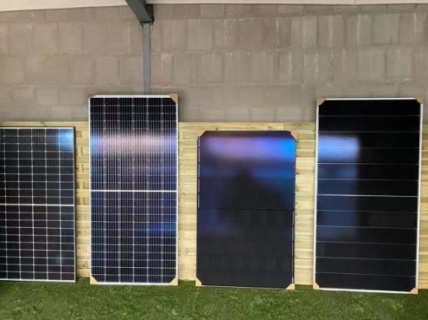
While the working principle of a solar cell may sound simple, several key components work together to ensure that electricity is efficiently produced and delivered. Let’s break down the key components of a solar cell:
The semiconductor material, usually silicon, is the heart of the solar cell. It’s responsible for absorbing sunlight and generating the electron-hole pairs that ultimately produce electricity. Silicon is widely used because of its high efficiency in converting sunlight into electrical energy and its abundance on Earth.
Monocrystalline Silicon: Made from a single crystal structure, monocrystalline silicon solar cells are known for their high efficiency and long lifespan.
Polycrystalline Silicon: Made from multiple silicon crystals, polycrystalline solar cells are slightly less efficient but are typically more affordable.
The p-n junction is formed by joining p-type and n-type semiconductor materials. It is at this junction where the electrons and holes are separated, creating an electric field that drives the flow of electrons through the external circuit.
The conductive contacts are thin metal strips placed on the front and back of the solar cell. These contacts allow the flow of electrons from the semiconductor material to the external circuit, where the electricity can be used or stored.
The top layer of a solar cell is typically made of tempered glass, which protects the sensitive semiconductor material from weather, dust, and mechanical damage. There are also anti-reflective coatings and back sheets to increase the efficiency of light absorption and provide durability.
While silicon-based solar cells are the most common, there are other types of solar cells, each with different efficiencies, costs, and applications:
Monocrystalline solar cells are made from a single, continuous crystal structure of silicon. These cells are known for their high efficiency (usually between 18-22%) and long lifespan. They are ideal for applications where space is limited, such as on rooftops.
Polycrystalline solar cells are made from silicon crystals that are melted together. These cells are less efficient than monocrystalline cells (usually between 15-18%) but are more affordable and are often used in large-scale solar power plants.
Thin-film solar cells are made by depositing one or more layers of photovoltaic material on a substrate. They are lightweight and flexible, making them suitable for a variety of applications, including portable devices and building-integrated photovoltaics. However, they are less efficient than silicon-based cells and are usually used in larger installations to offset the lower efficiency.
Perovskite solar cells are a newer type of solar cell that uses a compound called perovskite as the light-absorbing layer. These cells have gained significant attention for their potential to provide high efficiency at a lower cost. Researchers are still working to improve their stability and commercial viability.
Solar cells are at the forefront of the renewable energy revolution, harnessing the power of the sun to produce clean and sustainable electricity. By understanding how solar cells produce electricity through the photovoltaic effect, we can better appreciate their role in reducing our reliance on fossil fuels and protecting the environment.
As solar technology continues to improve, solar cells are becoming more efficient and affordable, making solar power an increasingly viable option for homes, businesses, and large-scale energy projects. At Chengdu Luneng New Energy Technology Co., Ltd., we are dedicated to providing high-quality solar energy solutions that help you harness the power of the sun. Whether you are looking to install solar panels for your home or develop a large-scale solar energy project, we are here to help. Feel free to contact us to learn more about how our products can help you make the transition to clean, renewable energy.



