


Views: 0 Author: Site Editor Publish Time: 2025-12-16 Origin: Site


Solar energy has become one of the most widely used renewable energy sources worldwide, thanks to its sustainability and environmental benefits. However, to harness solar energy effectively, solar cells must operate at maximum efficiency. Increasing the efficiency of solar cells is not just about reducing the cost of solar energy production but also optimizing their performance to meet the growing energy demands.
Solar cell efficiency refers to the amount of sunlight that a solar cell can convert into usable electricity. It is expressed as a percentage, with higher values indicating a more efficient conversion of sunlight into energy. For instance, a solar cell with a 20% efficiency can convert 20% of the sunlight it receives into electrical power, while the rest is either reflected or lost as heat.
Efficiency is crucial in determining how much power a solar panel can generate under specific environmental conditions, making it a key factor in optimizing solar energy systems. Higher efficiency means more energy production from a given area of solar panels, which is essential for reducing the land and space required for large-scale solar installations.
Several factors affect the efficiency of solar cells, ranging from material choices to design and environmental conditions. Understanding these factors is the first step toward improving solar cell efficiency.
The material used in solar cells has a significant impact on their efficiency. Silicon remains the most commonly used material due to its balance between cost and performance. However, the type of silicon used in the manufacturing process can affect efficiency levels, with variations seen between monocrystalline, polycrystalline, and thin-film cells.
Monocrystalline Silicon: These solar cells are made from a single, continuous crystal structure. This structure allows for free flow of electrons, making them the most efficient type of silicon solar cells, with efficiency rates typically between 18% and 22%. Monocrystalline cells are widely used due to their high power output and longevity.
Polycrystalline Silicon: Made from silicon crystals that are melted and then cast into molds, polycrystalline cells are less efficient than monocrystalline cells, with efficiency rates around 15% to 17%. The grain boundaries in polycrystalline material impede the free flow of electrons, reducing the overall efficiency of the cell.
Thin-film Solar Cells: Thin-film cells are made from layers of semiconductor materials deposited on a substrate, such as glass, metal, or plastic. These cells are lighter, more flexible, and cheaper to produce, but they offer lower efficiency, usually between 10% and 12%. While they are less efficient than silicon-based cells, their flexibility allows for a wider range of applications, including on curved surfaces and portable devices.
The choice of material impacts both the initial efficiency of the solar cell and its long-term performance. While monocrystalline cells provide the highest efficiency, polycrystalline and thin-film options may be more cost-effective for certain applications, offering a balance between cost and performance.
The ability of a solar cell to absorb light directly influences its efficiency. Solar cells work by absorbing photons from sunlight, and the more light they absorb, the more electricity they can generate. Efficiency is closely tied to the cell’s ability to capture light across the entire solar spectrum, from ultraviolet (UV) to infrared.
Anti-reflective Coatings: To enhance light absorption, anti-reflective coatings are applied to the surface of solar cells. These coatings help reduce the amount of light that is reflected away from the cell’s surface, ensuring that more light is absorbed into the cell, which directly increases efficiency.
Texturing the Surface: Another technique to improve light absorption is to texture the surface of the solar cell. By creating microscopic textures, light is scattered inside the cell, allowing it to travel through the layers and increase the chances of being absorbed. This can significantly improve the efficiency, especially in monocrystalline and polycrystalline silicon cells.
While sunlight enhances the energy output of a solar cell, high temperatures can have a negative impact on its efficiency. As solar cells heat up, their electrical resistance increases, which means the cell becomes less efficient at converting sunlight into electricity.
Thermal Management: Managing the temperature of solar cells is essential to maintaining their efficiency. Thermal management systems, such as heat sinks and ventilation, are used to keep the cells at an optimal operating temperature. This ensures that the cells do not overheat, reducing the negative effects of high temperatures on efficiency.
Materials with Low Temperature Coefficients: Some newer solar cell materials are designed to perform better in hot climates. These materials have a low temperature coefficient, meaning their efficiency is less affected by temperature increases compared to traditional silicon-based cells. By using materials that are less sensitive to temperature variations, solar cells can achieve more consistent performance, even in extreme weather conditions.
The efficiency of a solar cell is also influenced by how easily electrons can move through the material. Higher electron mobility allows for quicker transportation of electrons, reducing energy losses and improving overall performance.
Doping: By introducing small amounts of other elements into the semiconductor material (a process known as doping), it is possible to increase the movement of electrons, enhancing the cell’s efficiency.
Multi-junction Cells: Multi-junction cells are designed with multiple layers of materials, each optimized for different wavelengths of sunlight, which allows for better electron mobility and a broader range of light absorption.
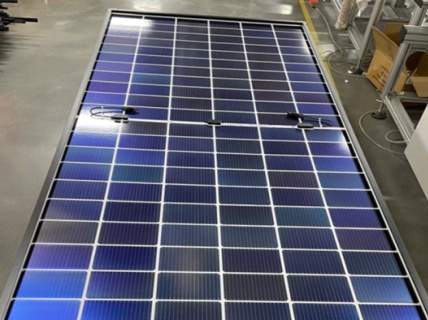
Now that we understand the factors that influence solar cell efficiency, let's explore some of the methods and technologies currently being used to improve the efficiency of solar cells.
Advancements in material science have led to the development of new materials that can significantly increase the efficiency of solar cells.
Perovskite Solar Cells: Perovskite materials have gained attention for their high efficiency and low manufacturing costs. These materials are still in the research phase, but they have already shown efficiencies of over 25%, surpassing traditional silicon solar cells.
Copper Indium Gallium Selenide (CIGS): CIGS is another promising material for thin-film solar cells, offering efficiencies between 15% and 20%. It is lighter and more flexible than silicon and is well-suited for applications where weight is a concern.
Concentrated solar power (CSP) systems use mirrors or lenses to focus sunlight onto a small area of solar cells, significantly increasing the intensity of light and, consequently, the energy generated. CSP systems can dramatically boost the efficiency of solar power systems, especially in areas with high solar irradiance.
Traditional solar panels are fixed in one position, meaning they only capture sunlight for a limited portion of the day. Dual-axis tracking systems adjust the orientation of solar panels so they follow the sun as it moves across the sky. This maximizes the amount of sunlight the panels can absorb, leading to a substantial increase in efficiency—sometimes by as much as 30%.
Bifacial solar panels are designed to capture sunlight on both the front and the back sides of the panel. This allows them to absorb reflected light from the ground or nearby surfaces, increasing overall energy generation by up to 30%. These panels are especially effective in environments with reflective surfaces such as snow or water.
Tandem solar cells stack multiple layers of different materials, each designed to absorb different wavelengths of sunlight. By capturing a wider range of the solar spectrum, tandem cells can achieve higher efficiencies than traditional single-layer solar cells.
Perovskite-Silicon Tandem Cells: Combining perovskite materials with silicon has shown great promise, with efficiencies exceeding 30%. This combination allows for the best of both worlds: the proven stability of silicon and the high efficiency of perovskites.
The manufacturing process plays a critical role in determining the efficiency of solar cells. New techniques in solar cell production, such as precision doping, laser cutting, and thin-film deposition, are being developed to improve the performance and reduce defects in solar cells, ultimately leading to higher efficiencies.
At Chengdu Luneng New Energy Technology Co., Ltd., we are dedicated to advancing solar technology and improving the efficiency of solar cells. Our team is focused on developing high-performance materials and manufacturing methods that contribute to higher solar cell efficiency, allowing us to provide more sustainable and cost-effective solar energy solutions.
We are at the forefront of integrating innovative technologies, such as perovskite solar cells, dual-axis tracking systems, and bifacial panels, to enhance the efficiency of solar installations. As the demand for renewable energy continues to grow, we remain committed to providing cutting-edge solutions that help harness the full potential of solar energy.
If you're interested in learning more about how our advanced solar cell technologies can help increase the efficiency of your solar energy systems, feel free to contact us. Our team is here to guide you through the process of optimizing solar energy generation for your projects, ensuring the highest performance and reliability. Let us help you contribute to a greener and more sustainable future.



